

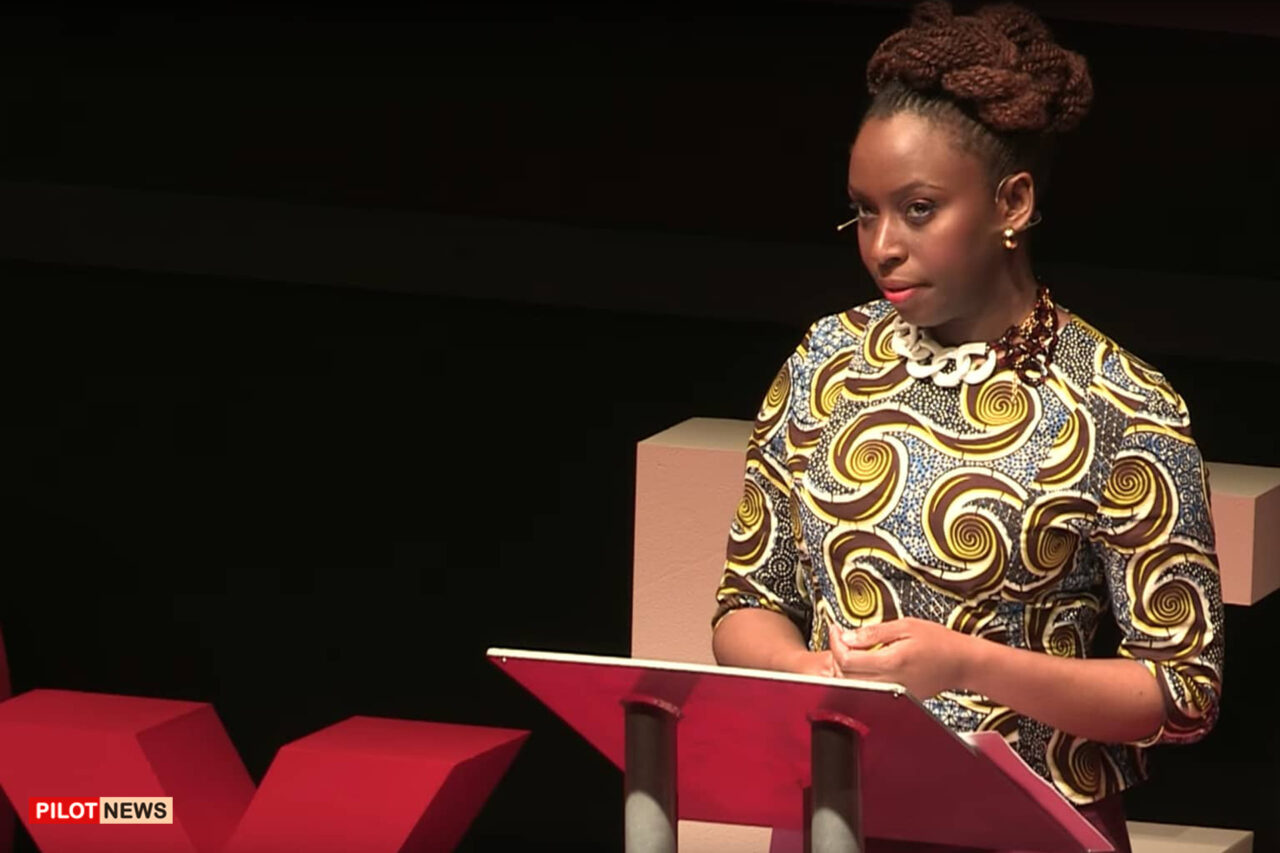
Nigerian author Chimamanda Ngozi Adichie has said the death of her 21-month-old son, Nkanu, has profoundly changed her relationship with Nigeria, saying she no longer wants to return to the country.
Adichie made the disclosure in an interview with The New York Times published on Thursday, where she spoke extensively about the death of her son and the ongoing dispute surrounding the circumstances of his treatment at a Lagos hospital.
Asked whether Nigeria still felt close to her, Adichie gave a brief but emphatic response.
“My feelings toward Nigeria have changed,” she said. “I do not want to go back to Nigeria.”
Nkanu, one of Adichie’s twin sons, died on 7 January 2026, after undergoing medical procedures at Euracare Multi-Specialist Hospital in Lagos.
According to the author, Nkanu initially developed a fever while the family was in Nigeria for the Christmas holidays. Her husband, Dr. Ivara Esege, a physician, treated him with antibiotics.
When the child failed to improve, the couple took him to a hospital. They were also making arrangements for him to receive treatment at Johns Hopkins Hospital in the United States.
Before the planned medical evacuation, Nkanu was referred to Euracare for diagnostic procedures, including an MRI.
Adichie said her son was sedated with propofol during the MRI and subsequently suffered cardiac arrest.
Recalling the moment a doctor approached her after the procedure, she said: “He was very calm, and he said to me, ‘Well, look, they gave him too much Propofol.’ Those were his exact words, which I will never forget until the day I die.”
The circumstances surrounding Nkanu’s death have triggered a legal and medical dispute.
The family has alleged medical negligence, raising concerns about the administration of propofol, the monitoring of the child, and the response to his deteriorating condition. Euracare has denied wrongdoing and maintained that the child was critically ill when he was referred to the hospital.
The Medical and Dental Council of Nigeria also investigated the case. In March, the council’s investigative panel found a prima facie case of medical negligence and professional misconduct against doctors involved in Nkanu’s treatment, according to reports. The disciplinary and legal processes remain ongoing.
A coroner’s inquest was opened in Lagos to establish the circumstances surrounding the toddler’s death.
However, proceedings have been delayed following a legal challenge by Euracare. In June, the Lagos State High Court granted the hospital leave to commence judicial review proceedings and ordered a temporary stay of the coroner’s proceedings.
The coroner subsequently adjourned the matter until 8 October 2026.
One of the issues before the court is the hospital’s challenge to the inquest, including arguments concerning the cremation of Nkanu’s remains before the inquest was commenced.
The New York Times reported that the hospital accused Adichie and her husband of destroying evidence by cremating their son. The family disputes the allegation and has criticized what it considers unnecessary delays in the process.
Adichie said the dispute had compounded the family’s grief.
“I feel so bad for Ivy,” she said, referring to her husband. “He’s on Zoom. He’s hearing it all. He’s hearing when someone is saying that he destroyed evidence, and by evidence, they mean our child.”
Despite the painful experience, Adichie and her husband have called for improvements in Nigeria’s healthcare system. They have not filed a civil lawsuit against Euracare, according to The New York Times.
Before Nkanu’s death, Adichie said Nigeria remained central to her identity and her work as a writer. She described the country as the place that gave her “everything” she needed to become a writer.
But she said the loss of her son had fundamentally altered that connection.
Her children, she added, might be the reason she eventually returns. Her daughter, she said, still considers Nigeria her “happy place”.
Reflecting on the loss, Adichie said the experience still felt unreal.
“I mean, it is so surreal, all of this. I still can’t believe we’re talking about my son who died,” she said. “You’re going through something, but you also feel like you’re outside of it.”

- Chimamanda Adichie: My Son’s Death Has Changed How I Feel About Nigeria - September 14, 2026
- Social Media Citizen Journalists Have Seized Nigeria’s Newsroom - September 13, 2026
- Nigeria’s Private Media at 30: Louder, Freer, but Weaker? - September 13, 2026