

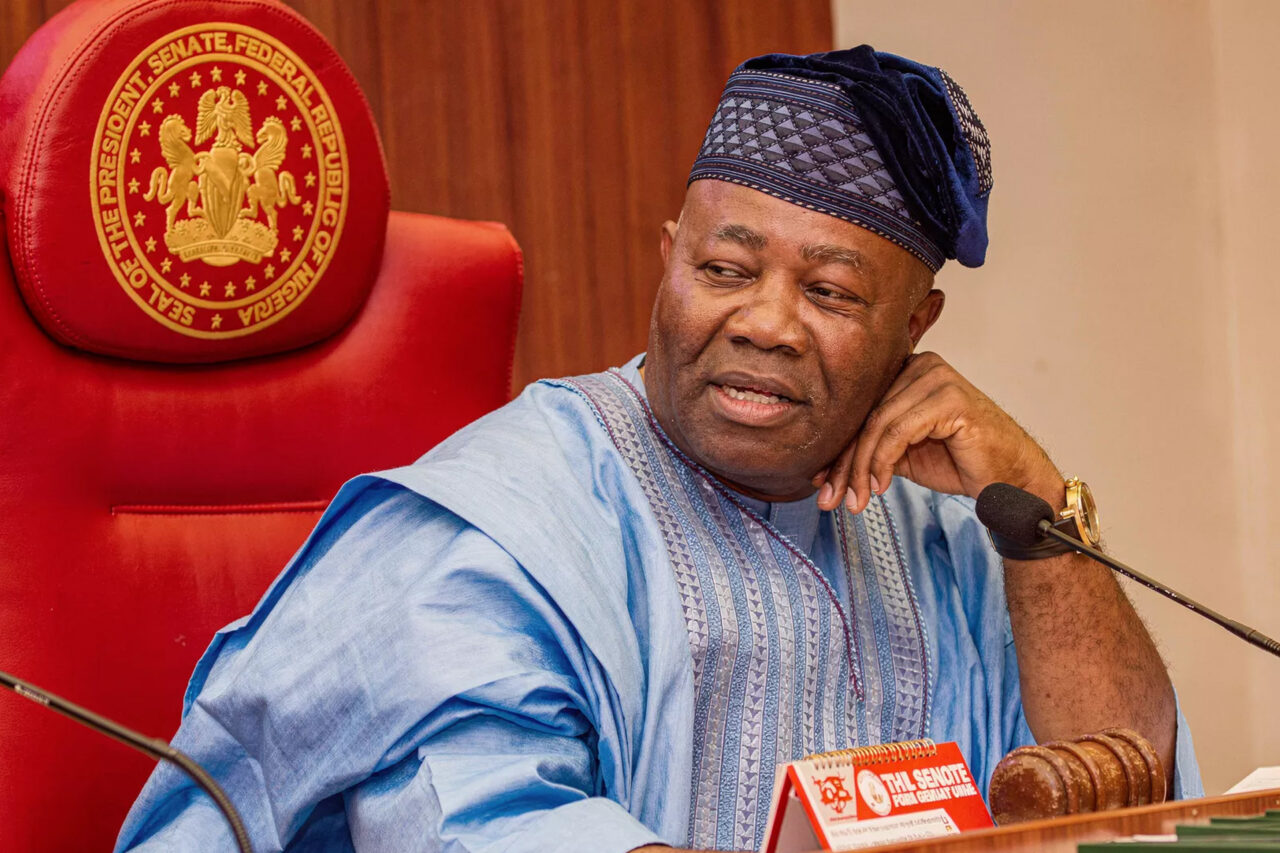
The National Assembly on Tuesday witnessed tense, rowdy sessions in both the Senate and the House of Representatives as lawmakers clashed over key provisions of the Electoral Act Amendment before advancing the proposed Electoral Act, 2022 (Repeal and Re-Enactment) Bill 2026.
In the Senate, the red chamber passed the Electoral Act, 2022 (Repeal and Re-Enactment) Bill 2026 after a heated debate over Clause 60, which deals with the transmission of election results.
Proceedings became heated shortly after plenary resumed when Senator Enyinnaya Abaribe (ADC, Abia South) demanded a division over Clause 60. Senate President Godswill Akpabio said he believed the demand had been withdrawn earlier, but opposition lawmakers immediately objected.
Citing Order 52(6), Deputy Senate President Barau Jibrin argued that it would be out of order to revisit a provision on which the Senate President had already ruled, sparking an uproar. Senator Sunday Karimi was briefly involved in a face-off with Abaribe during the exchange.
Senate Leader Opeyemi Bamidele reminded lawmakers that he had sponsored the motion for rescission, stating that earlier decisions of the Senate were no longer valid. He maintained that Abaribe’s demand was consistent with the motion.
Akpabio suggested that the call for division was “merely an attempt by Senator Abaribe to publicly demonstrate his stance to Nigerians,” before sustaining the point of order.
Rising under Order 72(1), Abaribe called for a division on Clause 60(3), specifically objecting to the proviso that allows manual transmission of results if electronic transmission fails and urging its removal.
During voting, 15 opposition senators opposed the proviso, while 55 supported it. The Senate subsequently retained the clause permitting manual collation in the event of technological failure.
Earlier, the Senate had rescinded its previous passage of the bill following concerns about the timing of the 2027 general elections and inconsistencies in the legislation.
Bamidele explained that the decision followed the Independent National Electoral Commission’s announcement that the 2027 general elections would be held in February 2027.
He noted that the 360-day notice requirement in Clause 28 could lead to elections being scheduled during Ramadan, which he warned “could negatively affect voter turnout, logistical coordination, stakeholder participation, and the overall inclusiveness and credibility of the electoral process.”
He also highlighted discrepancies affecting cross-referencing, serial numbering and internal consistency in several clauses of the bill, including Clauses 6, 9, 10, 22, 23, 28, 29, 32, 42, 47, 51, 60, 62, 64, 65, 73, 77, 86, 87, 89, 93 and 143.
At the House of Representatives, proceedings were similarly tense as lawmakers disagreed over a motion to rescind the chamber’s earlier passage of the Electoral Act Amendment Bill.
Chairman of the House Committee on Rules and Business, Francis Waive, moved the motion to rescind the decision on the bill passed on 23 December 2025, in line with the Senate’s position.
When Speaker Tajudeen Abbas put the motion to a voice vote, the “nays” were louder than the “ayes”, but he ruled that the ayes had it. The ruling triggered loud protests from lawmakers.
The House subsequently went into an executive session, but the disagreement persisted when plenary resumed. Tensions centred on Clause 60(3), which provides for compulsory electronic transmission of results.
Lawmakers stood up in protest and prevented Deputy Speaker Benjamin Kalu from continuing proceedings. Some aggrieved members eventually walked out of the chamber.
The House had earlier adopted compulsory real-time electronic transmission of results to the INEC Result Viewing Portal (IReV).
The clause states: “presiding officer shall electronically transmit the results from each polling unit to the IReV portal in real time, and such transmission shall be done after the prescribed form EC8A has been signed and stamped by the presiding officer and/or countersigned by the candidates or polling unit agents, where available at the polling unit.”
However, the Senate’s version rejected the strict “real-time” requirement and instead allowed electronic transmission with a manual option if technology fails.

- JAMB to Establish UTME Centre in Canada for Nigerians in North America - October 5, 2026
- 2027: INEC Targets Simultaneous Voting Nationwide - October 5, 2026
- Tinubu Orders Probe as NAF Jet Crashes in Ondo - October 5, 2026