

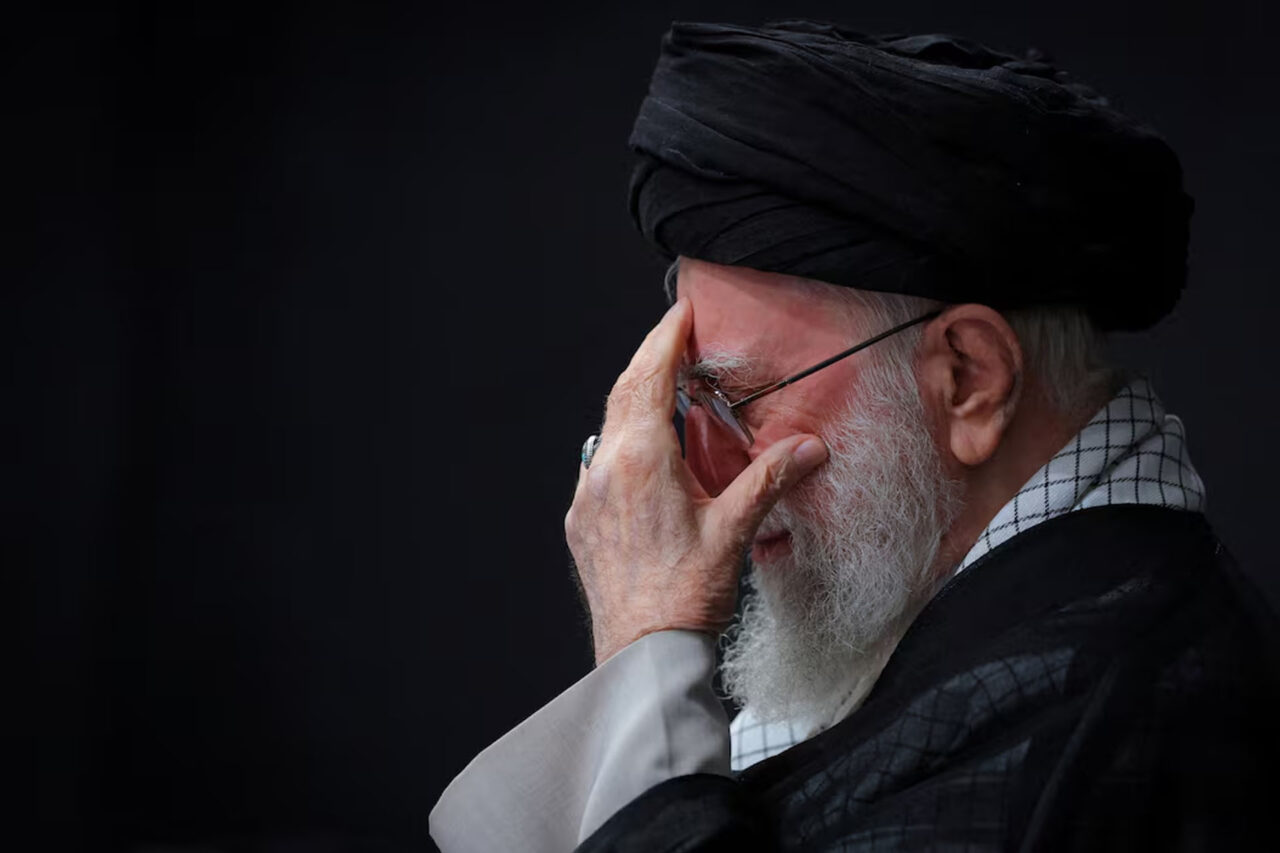
Members of the Islamic Movement in Nigeria (IMN), widely known as Shi’ites, took to the streets of several Nigerian states at the weekend in protests sparked by the reported killing of Iran’s Supreme Leader, Ayatollah Ali Khamenei, in a series of coordinated airstrikes by the United States and Israel.
Demonstrations were held in Lagos, Kano, Niger, Sokoto, Gombe, Kaduna, Bauchi and Yobe states, where supporters of the movement marched through city streets, waving Iranian flags and displaying large portraits of Khamenei and other Shi’ite leaders.
Protesters also carried placards denouncing what they described as “unjustified and barbaric aggression” by Washington and Tel Aviv, and chanted slogans expressing solidarity with the people of Iran.
In Niger State, dozens of IMN members mobilised soon after reports of Khamenei’s death emerged on social media, chanting unity slogans and displaying placards with inscriptions such as “We Stand With Iran” and “Free Iran.”
Their demonstrations, described by participants as peaceful, underscored deep sympathy with global Shi’ite communities affected by the Middle East conflict.
Witnesses in Kano State reported that hundreds of Shi’ite supporters marched from the Fagge Central Mosque to the Islamic Movement’s headquarters in Kofar Waika, where clerics spoke on the broader implications of the Middle East crisis and prayed for peace and divine intervention for the Iranian people. No incidents of violence were reported during this procession.
The backdrop to these protests is the death of Ayatollah Ali Khamenei, one of the most powerful figures in the Islamic Republic of Iran.
Iranian state media confirmed his death following the joint US-Israeli military strikes, which also claimed the lives of senior officials and family members, and destroyed parts of his compound in Tehran.
The US and Israeli governments have framed the strikes as aimed at degrading Iran’s military capabilities and deterring further escalation in the volatile Middle East.
However, the action has drawn widespread condemnation from several international actors and ignited protests among supporters of Iran’s leadership worldwide, including in parts of Africa and the Middle East.
In response to the evolving geopolitical situation and the heightened protest activity, Acting Inspector-General of Police, Tunji Disu, on Sunday, directed all commissioners of police across the country to intensify security measures.
According to Benjamin Hundeyin, the Force Public Relations Officer, the directive is intended to prevent any spill-over of international tensions into domestic unrest. The police have emphasised increased surveillance, collaboration with community leaders, and heightened visibility around worship centres and public spaces.
Disu reiterated that the Nigerian Police Force remains committed to maintaining national peace and that “Nigeria will not serve as a theatre for foreign conflicts”. He urged communities to remain calm, vigilant, and law-abiding.