

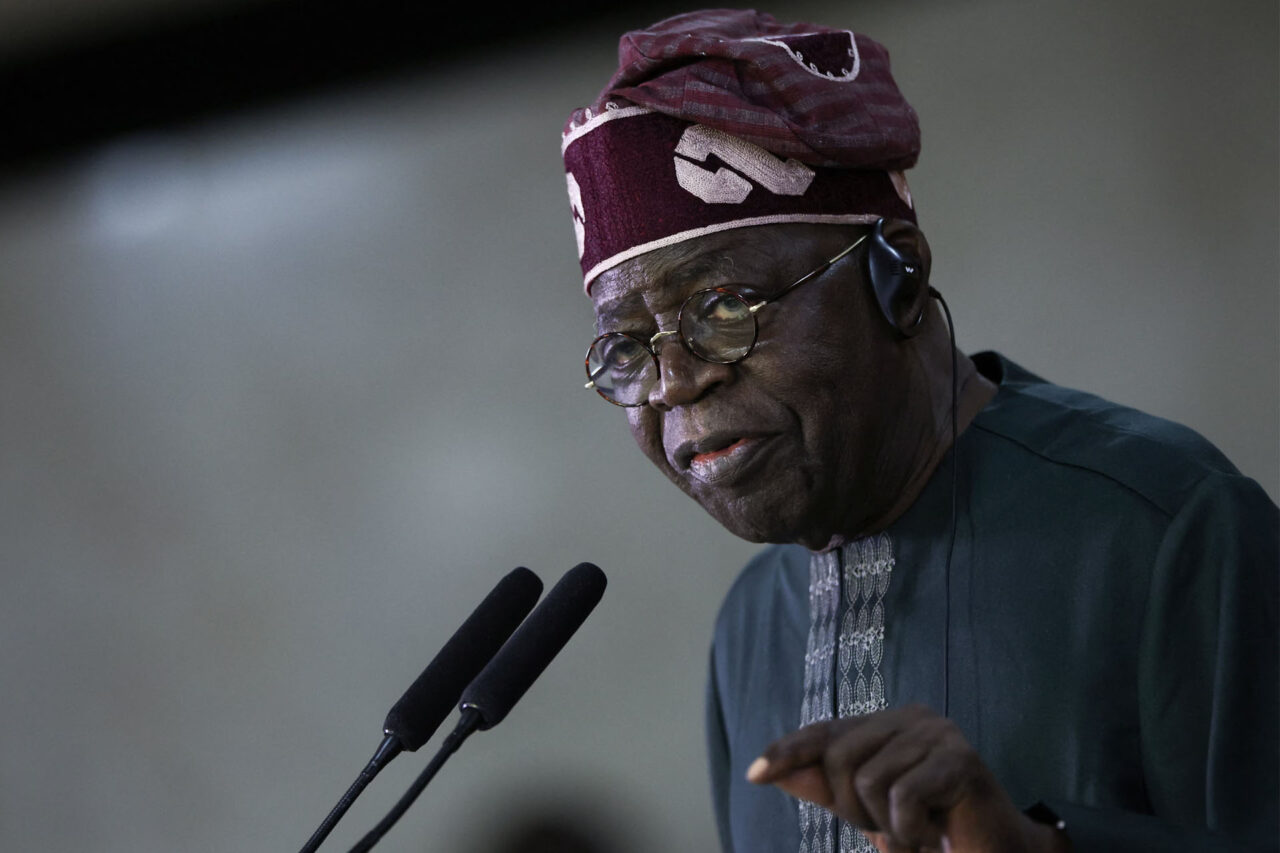
President Bola Tinubu has asked the National Assembly to approve a supplementary external borrowing plan of $20.52bn and €1.045bn to finance infrastructure and other development projects across the country in 2026 and 2027.
The request was conveyed in a letter read by the Senate President, Godswill Akpabio, during Tuesday’s plenary.
In the letter, Tinubu urged the lawmakers to give the proposed borrowing plan prompt consideration and approval to facilitate the implementation of government projects and programmes.
The proposed facilities amount to $20,517,755,901 and €1,045,083,643 under the Federal Government’s 2026–2027 Supplementary External Borrowing Plan.
The President said the funds would support projects across several sectors, including infrastructure, agriculture, healthcare, education, water supply, security and employment generation, as well as financial management reforms.
He explained that the proposed investments were intended to address Nigeria’s infrastructure deficit, accelerate economic growth and improve the living conditions of citizens.
Tinubu also said the projects and programmes had undergone technical and economic assessments to determine their potential contributions to the country’s socio-economic development.
According to the President, the scale of investment required to address Nigeria’s infrastructure needs makes additional external financing necessary.
Following the presentation of the letter, Akpabio referred the request to the Senate Committee on Local and Foreign Debts, in collaboration with the committees on Appropriations and Finance, for further scrutiny.
The committees were given one week to examine the proposal and report back to the Senate.
The request comes amid growing concerns over Nigeria’s rising public debt and the Federal Government’s continued reliance on borrowing to finance expenditure.
Data from the Debt Management Office showed that Nigeria’s total public debt stood at ₦166.79tn as of June 30, 2026, compared with ₦87.38tn at the end of June 2023.
The latest borrowing proposal has also renewed debate over the government’s fiscal policies, particularly following the removal of the petrol subsidy, which was expected to ease pressure on public finances and free up resources for development.
In April, the presidential candidate of the Nigeria Democratic Congress, Peter Obi, warned that the country risked a debt crisis, questioning the continued resort to borrowing despite the subsidy removal.
The Emir of Kano, Muhammadu Sanusi II, has also questioned the government’s continued borrowing, arguing that Nigerians should see tangible benefits from the removal of subsidy payments.
However, the Federal Government has defended its borrowing strategy, maintaining that external financing is necessary to bridge infrastructure funding gaps and support economic development.
In July, Finance Minister Taiwo Oyedele disputed claims that the Tinubu administration had borrowed about ₦80tn in three years, explaining that the increase in the country’s reported debt stock also reflected the effects of naira depreciation on external debt and the recognition of existing obligations.
The National Assembly had previously approved a $2.347bn external borrowing request in October 2025 to partly finance the 2025 budget deficit and refinance maturing Eurobonds, alongside a proposed $500m sovereign sukuk for infrastructure projects.

- Police Arrest Zamfara Youth Over Viral Video Calling for Killing of Christians - October 28, 2026
- Tinubu Seeks Approval to Borrow $20.5bn, €1.04bn for 2026–2027 Projects - October 28, 2026
- INEC Admits Suspicious Photos in Voters’ Register, Begins Review - October 28, 2026