

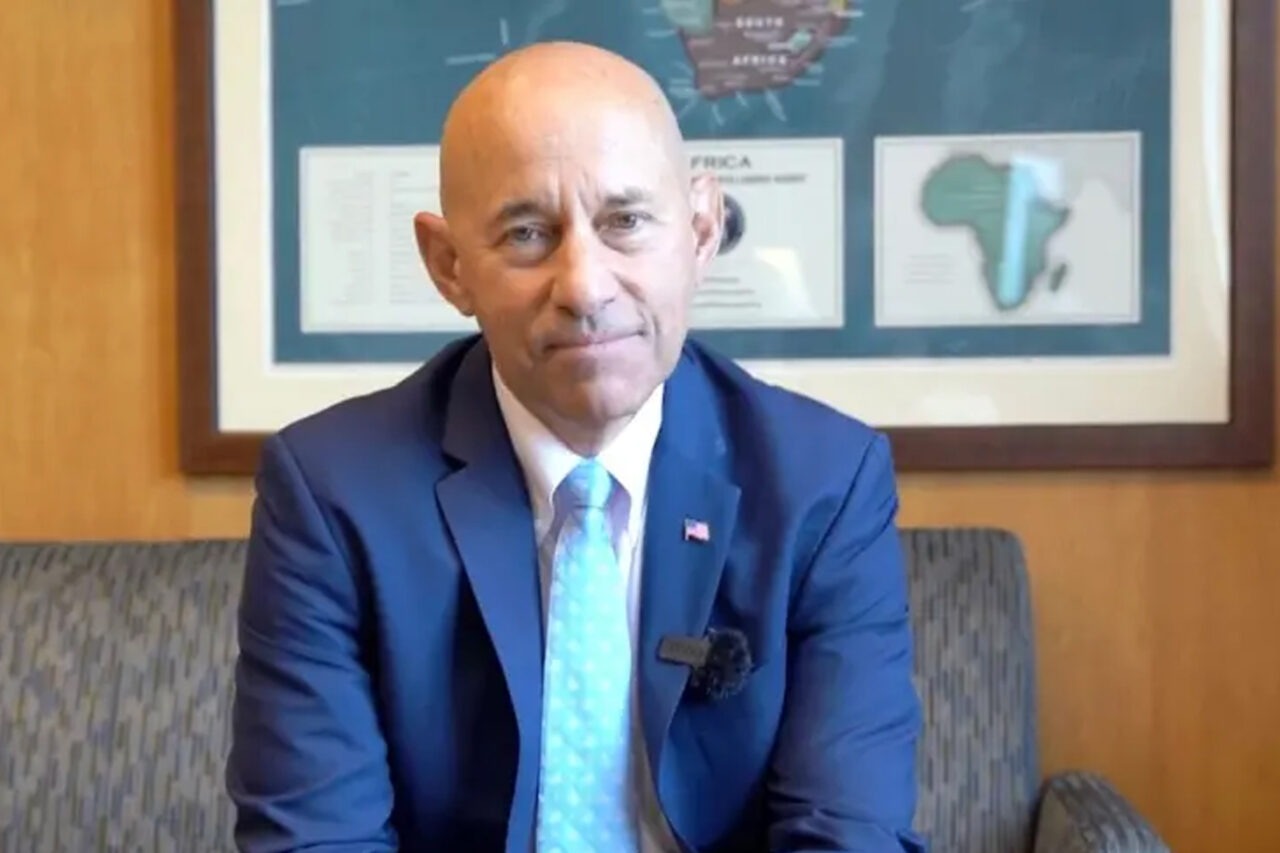
The United States has accused Nigeria of failing to make sufficient progress in protecting Christian communities from attacks, with a senior American official admitting that the country’s security response has yet to produce meaningful results.
Assistant Secretary of State for African Affairs, Frank Garcia, made the assessment on Thursday during a hearing of the US House Foreign Affairs Subcommittee on Africa, where lawmakers examined Nigeria’s efforts to tackle insecurity and protect vulnerable communities in the Middle Belt.
The hearing, titled One Year Later: Assessing Nigeria’s Efforts to Protect Christians and Secure the Middle Belt, came nearly a year after US President Donald Trump redesignated Nigeria as a Country of Particular Concern (CPC) over alleged religious persecution.
During the session, US Congressman Riley Moore questioned the Nigerian government’s efforts to dismantle militia strongholds and kidnapping camps, particularly in Benue and Plateau states.
He demanded details of security operations carried out since August, when US Under Secretary of State for Political Affairs, Allison Hooker, raised concerns about the pace of Nigeria’s response to attacks.
Moore also questioned the exclusion of Benue and Plateau from the 10 states covered by Nigeria’s new forest guard initiative, despite persistent violence in the two states. He further noted that 1,000 forest guards approved by President Bola Tinubu for Plateau State had yet to be deployed.
Insisting that Washington should not remove Nigeria from the CPC list, the congressman said the government had failed to do enough to address the violence.
“Before you answer that, we cannot take this CPC designation off of this country. They have not done enough,” Moore said.
Responding, Garcia acknowledged that Nigeria had made inadequate progress, although he maintained that the government was taking steps to address the concerns raised by Washington.
“I think we would agree, as Under Secretary Hooker stated, after our CPC meeting that progress has not been there, but that doesn’t mean that Nigeria is dismissing concerns, and it doesn’t mean that they’re not taking actions, but it does mean that it hasn’t had an impact to this point,” he said.
Garcia described Nigeria’s security response as largely focused on building capacity, warning that the measures were yet to translate into effective protection for vulnerable communities.
“I would have to characterise the Nigerians’ placement at this point as in building capacity. And that capacity is not deployed, is not being effective yet, and is not moving fast enough, as far as I’m concerned. But we do see a seriousness, and a deployment underway with the Nigerian government,” Garcia said.
He identified the US–Nigeria Joint Working Group, established following Nigeria’s CPC designation, as a key mechanism for monitoring the government’s commitments and ensuring accountability.
The group held its first meeting in Abuja in January and a second session in Washington in August. Its engagements have focused on strengthening security deployments in vulnerable communities, improving responses to early warnings of attacks, prosecuting perpetrators and deepening military cooperation.
Garcia said the US had also provided training and equipment to police units responsible for protecting vulnerable communities in the Middle Belt through its Bureau of International Narcotics and Law Enforcement Affairs.
Washington has further expanded biometric information-sharing with Nigerian authorities to help identify and prosecute perpetrators. It has also worked with Nigerian financial institutions to develop an action plan aimed at disrupting terrorist financing networks linked to attacks on churches.
At the August meeting, Hooker reportedly pressed Nigerian officials on civilian casualties, the safe and voluntary return of internally displaced persons to their communities and the need for greater transparency in humanitarian aid expenditure and delivery.
However, Garcia acknowledged that Nigeria’s security architecture remained overstretched, while limited judicial access to parts of the Middle Belt continued to undermine efforts to bring perpetrators to justice.
In his prepared testimony, he cited a July 27 attack on a Christian community in Kaduna State and killings in Plateau State in August and September as evidence that the violence had persisted despite diplomatic engagements.
“Unfortunately, the violence has not stopped,” Garcia said.
Another US official, Assistant Secretary of State for Democracy, Human Rights and Labour, Riley Barnes, also told the hearing that Nigeria had taken steps to address insecurity, including recruiting more police officers, deploying forest guards and increasing arrests and prosecutions.
However, he said these measures had yet to improve the safety of Christian communities in the Middle Belt.
Garcia also warned that Nigeria’s forthcoming presidential election in January 2027 could further complicate the security situation and potentially trigger violence.
The US designation of Nigeria as a Country of Particular Concern was announced by Trump on October 31, 2025, under the International Religious Freedom Act. The designation followed allegations that Christians were being systematically targeted and killed by extremist groups.
The Nigerian government has consistently rejected claims of a Christian genocide or systematic religious persecution, arguing that the country’s security challenges are driven by terrorism, banditry, farmer-herder conflicts and other forms of criminality that affect Nigerians across religious lines.
Despite the disagreement over the characterisation of the violence, Washington has maintained that protecting vulnerable communities and holding perpetrators accountable must remain priorities.
Garcia said the Trump administration would continue to use diplomatic engagements, the CPC designation and targeted security cooperation to press Nigeria to improve its response and protect Christian communities.

- One Year After CPC Listing, US Says Killings of Christians Persist in Nigeria - November 14, 2026
- Amupitan: My Loyalty is to Constitution, Not Politicians - November 14, 2026
- US to Monitor Nigeria’s 2027 Presidential Election - November 14, 2026