

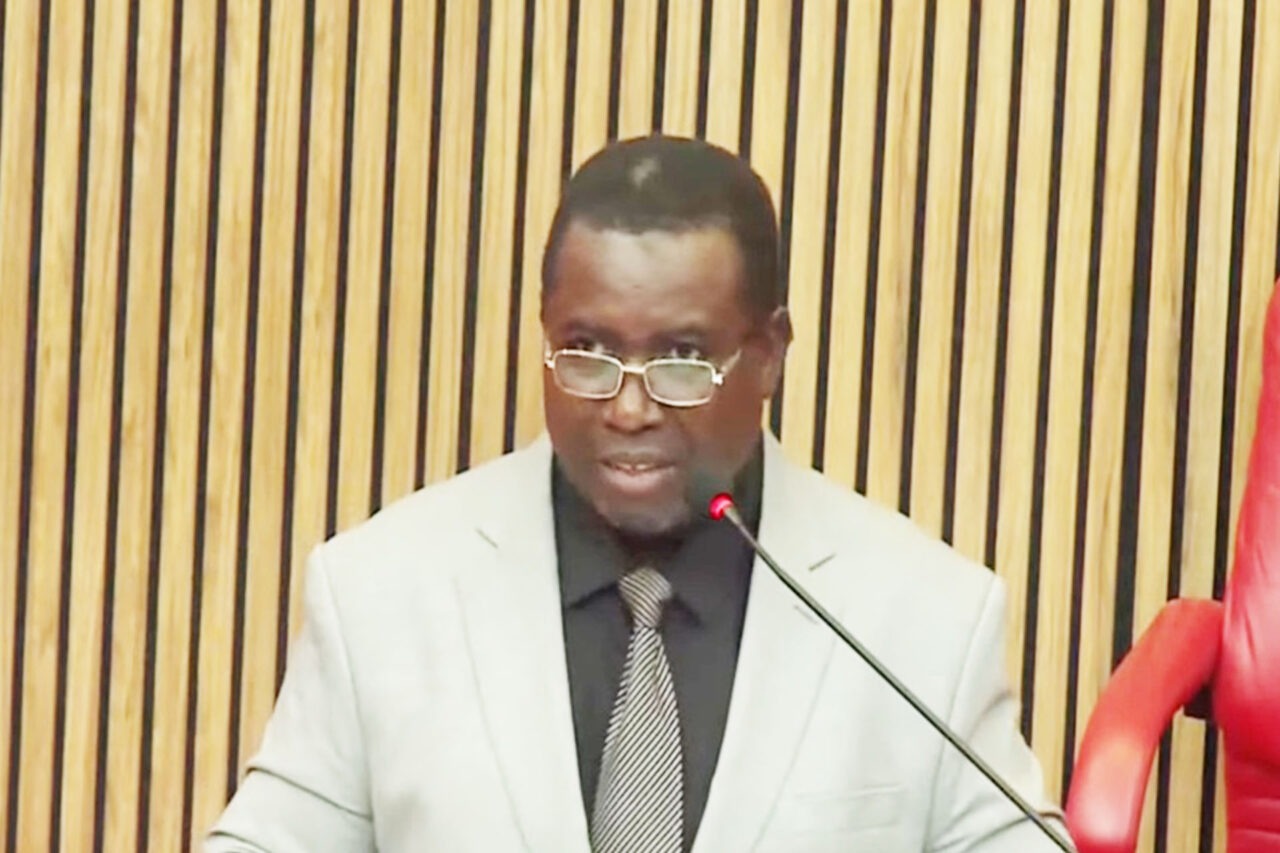
The Chairman of the Independent National Electoral Commission (INEC), Prof. Joash Amupitan, has declared his allegiance to the Nigerian Constitution and the Electoral Act, insisting that he will remain impartial in the discharge of his duties ahead of the 2027 general elections.
Amupitan gave the assurance on Thursday during a high-level dialogue at Chatham House in London, organised in partnership with the Kimpact Development Initiative (KDI).
The discussion, themed Nigeria’s 2027 Elections: Democratic Trajectory and Regional Stability Beyond the Ballot, provided an opportunity for the INEC chairman to address concerns about his political neutrality and the credibility of the electoral process.
His remarks came amid controversy over an X account allegedly linked to him, which reportedly published partisan messages in support of President Bola Tinubu and the ruling All Progressives Congress during the 2023 general elections.
Denying ownership of the account, Amupitan said an independent forensic examination had been conducted and the matter referred to the Department of State Services and the Inspector-General of Police for investigation.
He also dismissed suggestions that his previous involvement in politically sensitive court cases as a lawyer could undermine his impartiality, explaining that he had acted in his professional capacity before becoming INEC chairman.
“My loyalty is solely to the Constitution of the Federal Republic of Nigeria and the Electoral Act,” he declared. “Every constitutional institution—including the Presidency, the National Assembly, and state governors—owes its primary loyalty to the Constitution and the rule of law.”
Amupitan also pledged not to accept any political or diplomatic appointment after leaving INEC, saying his decision to lead the commission was based on public trust.
“I’m not going to accept any appointment from anybody because coming to serve here is based on trust,” he said.
2023 election dented INEC’s credibility
The INEC chairman acknowledged that the controversies surrounding the 2023 presidential election had severely damaged public confidence in the electoral body, admitting that the commission was yet to fully recover from the setback.
“First and foremost, let me speak about what happened in 2023, which resulted in a significant trust deficit for INEC—damage so large that the Commission has not yet fully recovered from it,” he said.
He, however, maintained that the commission had learnt from the shortcomings of the 2023 elections, citing improvements recorded in subsequent off-cycle polls, particularly in Anambra and Osun states, where results were declared a day after voting.
Amupitan also identified insecurity, logistics and result management as the three major challenges INEC must address before the 2027 elections.
On electoral technology, he disclosed that the commission had introduced additional safeguards to prevent inaccurate polling unit results and cases of over-voting from being uploaded to its Result Viewing Portal (IReV).
According to him, INEC’s review of the 2023 elections revealed that some of the major irregularities occurred at collation centres rather than polling units.
He said the commission had consequently introduced validation mechanisms to ensure that results that fail accuracy checks at polling units cannot be uploaded to the portal.
The chairman also disclosed that INEC had acquired additional Bimodal Voter Accreditation System (BVAS) machines and reduced the maximum number of registered voters assigned to each device from 1,250 to 850.
Polling units with more than 850 registered voters, he added, would be provided with multiple machines to prevent technical difficulties during accreditation.
He further announced that the commission would conduct a nationwide mock accreditation and voting exercise on November 28 to test its preparations for the 2027 elections.
On voter register controversy
The INEC chairman also addressed allegations of irregularities in the voters’ register, including claims that the number of registered voters in a ward in Ebonyi State had increased by 85 per cent.
He said the commission had investigated the complaint and resolved it in accordance with the provisions of the Electoral Act.
Amupitan explained that the law provides opportunities for members of the public to raise objections, make claims and obtain certified true copies of the voters’ register.
He urged Nigerians, particularly young people, to remain actively involved in the democratic process and resist the spread of misinformation, which he described as a major threat to electoral credibility.
“This country belongs to young Nigerians, and they must not relent in working for the Nigeria they desire,” he said. “Misinformation remains one of the greatest threats to our democracy. Citizens must verify information before acting or sharing, and give our democracy the chance to succeed.”
His appearance at Chatham House came amid lingering public concerns over INEC’s handling of previous elections and questions about its preparedness for the 2027 polls.
The concerns were also evident outside the London venue, where a group of Nigerian protesters confronted the INEC chairman after the event, demanding answers over alleged irregularities in the voters’ register and the country’s electoral process.

- One Year After CPC Listing, US Says Killings of Christians Persist in Nigeria - November 14, 2026
- Amupitan: My Loyalty is to Constitution, Not Politicians - November 14, 2026
- US to Monitor Nigeria’s 2027 Presidential Election - November 14, 2026