

…Tinubu Announces Investopia Lagos Co-Hosting
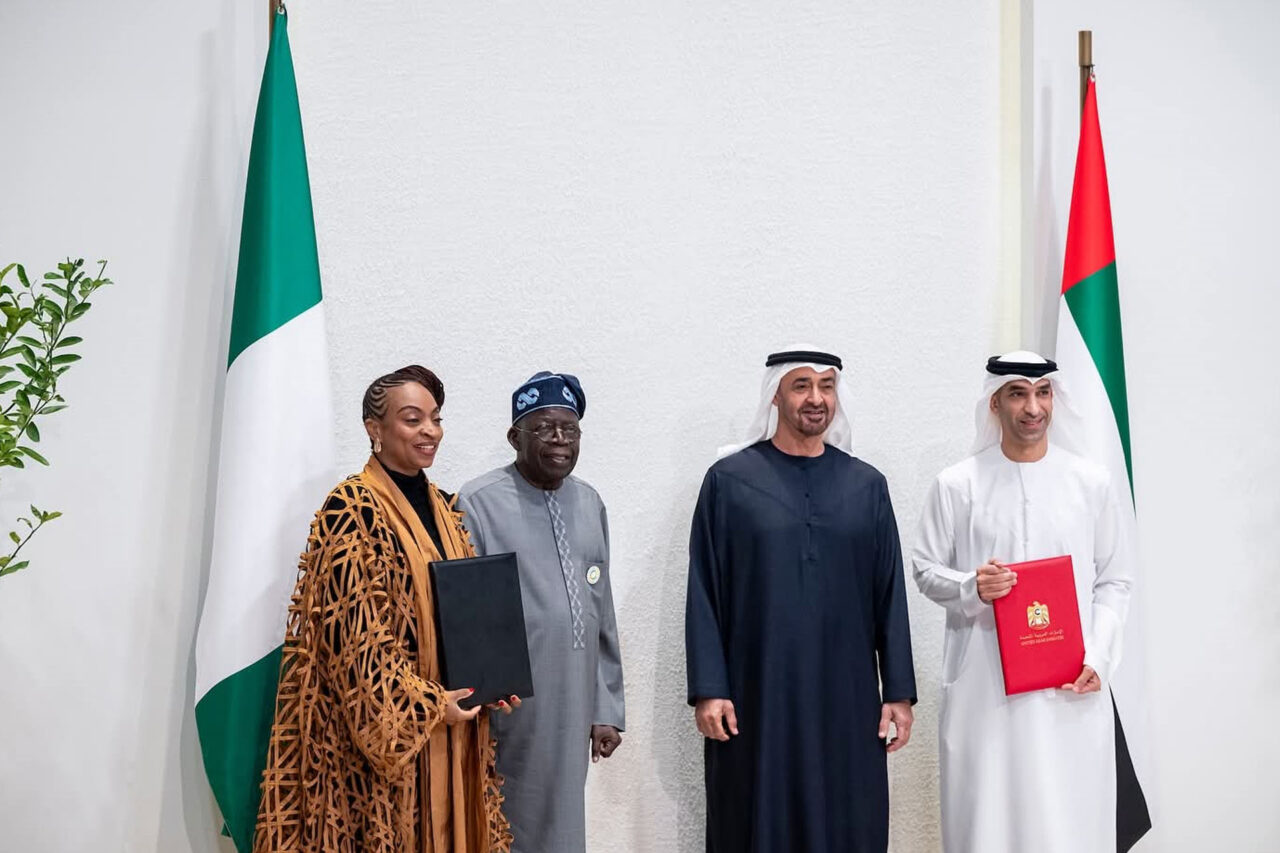
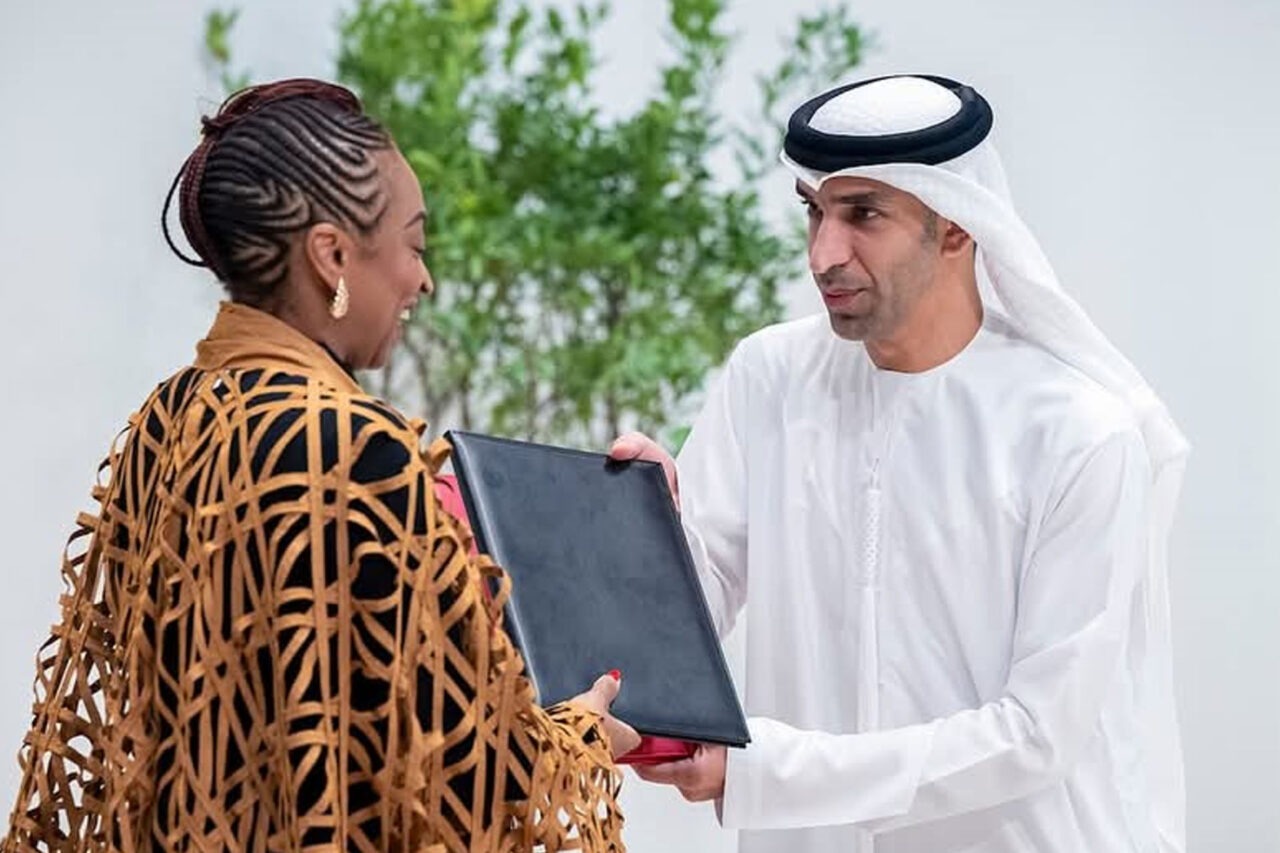
Nigeria and the United Arab Emirates (UAE) have signed a Comprehensive Economic Partnership Agreement (CEPA), aimed at deepening trade, investment, and economic cooperation between the two countries, as government officials described it as a major milestone in Nigeria’s economic diplomacy.
The agreement was signed on the sidelines of the 2026 Abu Dhabi Sustainability Week (ADSW) in Abu Dhabi, with President Bola Tinubu and the President of the UAE, Mohamed bin Zayed Al Nahyan, in attendance.
Nigeria’s Minister of Industry, Trade and Investment, Dr Jumoke Oduwole, and the UAE Minister of Foreign Trade, Dr Thani bin Ahmed Al Zeyoudi, also witnessed the signing.
President Tinubu announced that Nigeria would co-host Investopia with the UAE in Lagos in February, an initiative aimed at attracting global investors and promoting sustainable investment inflows.
He described CEPA as “a historic and strategic agreement” that would enhance cooperation in aviation, logistics, agriculture, and climate-smart infrastructure.
“This agreement will also enhance cooperation in aviation, logistics, agriculture, and climate-smart infrastructure, creating enduring opportunities for the people of the two countries,” the President said.
Explaining the importance of Investopia, Tinubu noted that it would bring together global stakeholders to convert ideas into real investments.
“We warmly invite our partners to join us and help build the next chapter of sustainable and shared prosperity for Nigeria, Africa, and the world,” he said.
In a separate statement, Dr. Oduwole said the agreement prioritized market access for Nigerian goods and services, supporting Nigeria’s economic diversification drive under President Tinubu’s Renewed Hope Agenda.
“For Nigerian exporters, the UAE will eliminate tariffs on over 7,000 products,” she said.
She added that agricultural and industrial products such as “fish and seafood, oil seeds, cereals, cotton, pharmaceuticals, chemicals, and more, will enter the UAE market duty-free.”
According to her, tariffs on Nigerian machinery, vehicles, electrical equipment, apparel and furniture will also be eliminated over the next three to five years.
She further disclosed that Nigerian businesses can now establish operations in the UAE through new corporate entities, branches and subsidiaries, while business visitors can stay in the UAE for up to 90 days within a year.
“Intra-corporate transferees, our managers, executives, and specialists can relocate with their corporate entities for renewable three-year periods,” she stated.
Dr. Oduwole said the agreement would improve Nigeria’s investment climate and encourage foreign direct investment in the productive sectors of the economy.
“This will support Nigeria’s industrialisation agenda, enhance transport and logistics connectivity, and contribute to the creation of quality jobs for our youthful population,” she said.
Under the agreement, Nigeria will also eliminate tariffs on approximately 6,000 products, with 60 percent of them removed immediately and the remainder phased out over a five-year period. These products are mainly industrial inputs, capital goods, and machinery.
She noted that Nigeria’s Import Prohibition List would remain in force.
On services, Nigeria made commitments in 99 services across 10 sectors, including business services, communication, transport, financial services, construction, health, tourism and environmental services.
Nigeria as AfCFTA gateway
Dr. Oduwole said CEPA positioned Nigeria as a gateway for investors seeking access to the African Continental Free Trade Area market, which comprises 1.4 billion people.
She disclosed that UAE institutional investors, including First Abu Dhabi Bank, were already participating in major Nigerian infrastructure projects such as the Lagos–Calabar Coastal Road.
“The signing of the Agreement signals acceleration of deals in agriculture, real estate, digital banking, retail and infrastructure financing,” she said.
She assured that relevant agencies, including the Nigeria Customs Service, the Nigerian Export Promotion Council, the Nigerian Investment Promotion Commission, and the Standards Organisation of Nigeria, would ensure the smooth implementation.
“This Agreement was negotiated for you. I urge you to identify your opportunities with enhanced market access and move with confidence into the UAE market with the protections we have secured for you,” she told the Nigerian private sector.
At the ADSW summit, President Tinubu stated that Nigeria aims to mobilize up to $ 30 billion annually in climate and green industrial finance.
“The foundation of every modern economy is electricity. As an emerging economy in the Global South, we understand the delicate balance between industrialisation and decarbonisation, ensuring neither is pursued at the expense of the other,” he said.
He called for reforms in global finance, stating: “We are calling for a fundamental shift in the global financial architecture: a move away from the restrictive requirement of sovereign guarantees, which unfairly penalise developing economies.
“Instead, the focus should be on blended finance and first-loss capital mechanisms that allow private sustainable capital flows directly into our green projects without further straining national balance sheets.”
Tinubu stated that Nigeria has strengthened its climate governance through the implementation of a National Carbon Market Activation Policy and a National Carbon Registry.
He also highlighted the Electricity Act 2023, a $500 million renewable energy fund, and a $750 million World Bank program expected to expand clean electricity access to over 17.5 million people.
The President reaffirmed Nigeria’s target of achieving net-zero emissions by 2060 and invited investors to participate in Nigeria’s lithium and critical minerals sector, with an emphasis on local processing.
On economic reforms, he said: “Non-oil exports have grown by 21 per cent, supported by a more diversified product base. Capital importation has increased, and Nigeria now has over $ 50 billion in investment commitments across key sectors.
“We are ready to work with partners across the world to ensure that the next era of development is not only green and inclusive, but just and enduring.”

- Tinubu Welcomes Egbetokun’s Resignation, Appoints Tunji Disu as Acting IGP - February 25, 2026
- Tinubu Welcomes Egbetokun’s Resignation, Appoints Tunji Disu as Acting IGP - February 25, 2026
- Paris Saint-Germain’s Achraf Hakimi to Stand Trial over Rape Allegation - February 25, 2026