

The Independent National Electoral Commission (INEC) has removed 1,609,553 records from the national voters’ register and identified 54 personnel across 10 states for possible prosecution over registration irregularities ahead of the 2027 general elections.
The clean-up uncovered multiple registrations, manipulated photographs, suspicious registration patterns and records belonging to deceased persons.
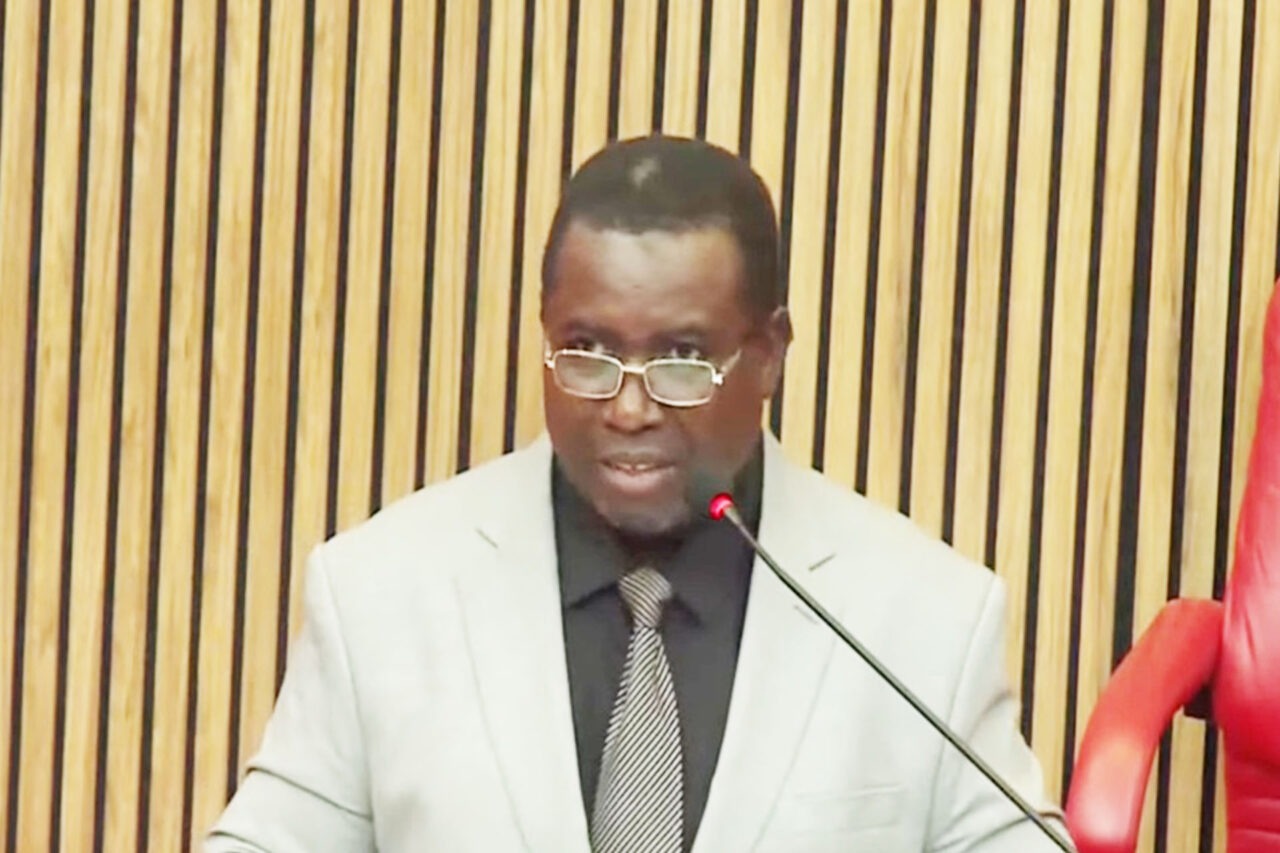
INEC Chairman, Prof. Joash Amupitan, disclosed this on Monday in Abuja while presenting the outcome of the commission’s review of the Preliminary Register of Voters.
He explained that the deleted records comprised 1,608,660 confirmed invalid registrations and 873 records belonging to verified deceased voters.
Amupitan said the commission had also uncovered instances where registration personnel deliberately bypassed established procedures and abused provisions designed to accommodate exceptional registration circumstances, particularly those involving persons with disabilities.
“Fifty-four persons cutting across ten states have been identified as complicit and necessary disciplinary action will be taken against them including possible prosecution,” he said.
The chairman said the commission had concluded the clean-up of the 2025/2026 Continuous Voter Registration (CVR) exercise following complaints and objections raised by Nigerians during the display of the preliminary register between October 9 and 15.
He added that final reconciliation, quality assurance and publication checks were ongoing ahead of the release of the Final Register on December 15, 2026.
Giving a breakdown of the exercise, Amupitan said INEC harvested 11,088,238 registration records from the three phases of the CVR exercise.
The commission’s Automated Biometric Identification System (ABIS) initially flagged 1,545,052 records for further examination, although he stressed that being flagged did not automatically mean a registration was invalid.
Before the publication of the preliminary register, 1,277,052 registrations had been confirmed invalid and excluded.
Following public complaints, another 268,000 cases underwent adjudication. Of these, 217,722 were confirmed invalid and removed, while 50,278 were cleared and retained.
An additional screening exercise identified another 113,886 invalid registrations, bringing the total number of invalid registrations removed to 1,608,660. The removal of 873 verified deceased voters’ records brought the overall figure to 1,609,553.
Amupitan said the irregularities were not limited to the latest registration exercise, noting that the national register had accumulated records from successive registration exercises dating back to 2011.
He said many of the complaints involving multiple registrations and suspicious photographs circulating on social media concerned historical records captured between 2011 and 2023.
The chairman also confirmed that INEC had uncovered cases involving manipulated and artificial intelligence-generated photographs.
To prevent further abuse, he said the commission had directed its Director of Information and Communication Technology to discontinue the use of external webcam-based image uploads for voter registration.
He explained that photographs would henceforth be captured through an approved application, while additional authentication and verification safeguards would be introduced.
“You see, it takes just one person to compromise the password. Some of those things are given in authority. And when that is done, you know what AI can do,” he said.
Amupitan also disclosed that INEC had approved an Artificial Intelligence Governance Framework to regulate the responsible use of AI in its operations.
He said the framework was developed in collaboration with partners, including the Institute for Security Studies and the British High Commission, and had undergone peer review.
The commission, he added, was strengthening its information technology infrastructure and cybersecurity measures ahead of the 2027 elections.
Despite the irregularities, the INEC chairman maintained that existing safeguards, particularly the Bimodal Voter Accreditation System (BVAS), would prevent multiple accreditation and voting.
He explained that voters would be required to appear physically at their designated polling units for biometric authentication through fingerprints or facial recognition.
Meanwhile, Amupitan said INEC would not immediately act on the Federal High Court judgment nullifying the leadership of the African Democratic Congress (ADC) led by former Senate President David Mark.
The court, presided over by Justice Peter Lifu, had on November 5 nullified the Mark-led leadership and its decisions, including the process that produced former Vice-President Atiku Abubakar as the party’s presidential candidate for the 2027 elections.
The judgment followed a suit filed by Nafiu Bala Gombe, a former ADC deputy national chairman, challenging the emergence of the Mark-led leadership.
However, the ADC has appealed the judgment and applied for a stay of execution, urging INEC to refrain from taking further action pending the determination of the appeal.
Amupitan said the commission would first obtain and examine the certified judgment and relevant court processes before deciding its next line of action.
“We don’t just act on the basis of what was posted on the social media. Remember one of the judgments of Supreme Court sometime ago that was posted on social media, It trended and the Supreme Court disowned itself from it, and even some people have been investigated,” he said.
“So, normally, when we receive judgment like that, it comes with the provision of the relevant documents, like Certified True Copy surrounding each case. And in this case, I have yet to receive the judgments. So the judgment is to be received and studied. You know I’m also a lawyer. Apart from that, I will go through it to see the processes that have been filed.”
Meanwhile, the INEC chairman also disclosed that he had yet to receive a subpoena directing him to appear as a defence witness in the ongoing criminal trial of human rights activist and African Action Congress (AAC) presidential candidate, Omoyele Sowore.
A Federal High Court in Abuja had issued the subpoena directing him to produce electoral documents relating to President Bola Tinubu’s 1999 Lagos State governorship election and the 2023 presidential election.
The documents include Tinubu’s Form CF001 submitted for the 1999 governorship election and the corresponding form submitted during the 2023 presidential election.
The subpoena was issued in connection with Sowore’s trial over his description of the President as a criminal.
Amupitan said he would examine the order and comply with its provisions upon receiving it.
“I have not received the order. So when I receive the order, I would look at what it says and then know what to do accordingly”, he said.
On calls for early voting for journalists and electoral officials who would be engaged on election duty, the INEC chairman said the proposal was not provided for under the existing electoral law.
He explained that previous efforts to introduce early voting through amendments to the Electoral Act had failed to secure the necessary support from the National Assembly.
He, however, expressed support for continued advocacy on the issue, noting that electoral officials and journalists should also have the opportunity to exercise their voting rights.

- 54 Officials Face Sanctions as INEC Deletes 1.6m Invalid Records - November 10, 2026
- Makinde Accuses APC of Stealing Ideas From His 2027 Presidential Manifesto - November 10, 2026
- Wike Promises ₦10m to Every FCT Councillor Who Delivers Ward for Tinubu - November 10, 2026