

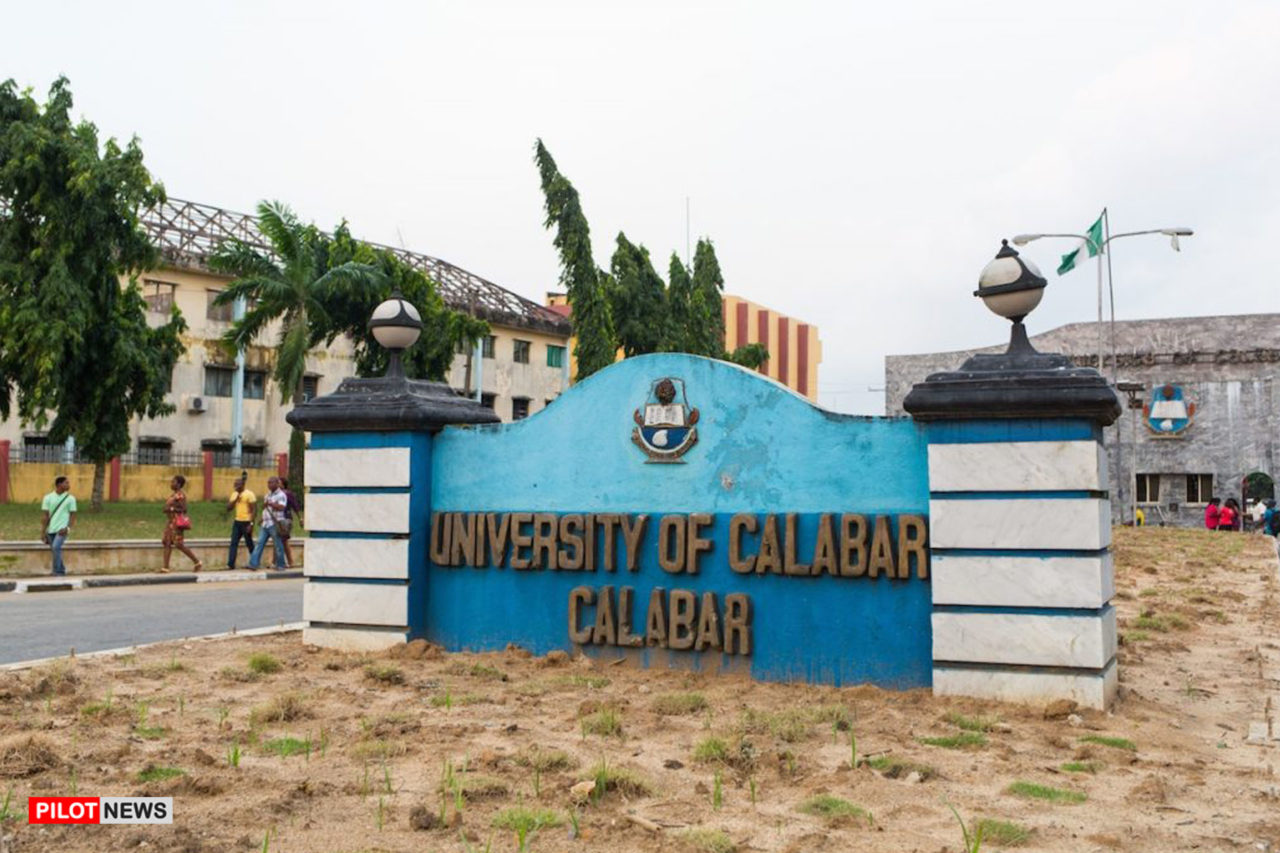
The Federal High Court in Calabar has ordered the University of Calabar (UNICAL) to pay ₦55 million in damages to eight engineering students admitted into programmes that lacked accreditation.
Delivering judgment in suit number FHC/CA/CS/117/21, Justice R. O. Dugbo-Oghoghorie ruled that the university acted unlawfully by admitting students into engineering programmes that had not received approval from the National Universities Commission (NUC).
The case was instituted in 2021 by Idiong Ekpedeme Godwin and seven other students, popularly referred to as the “UNICAL 8”, who sued the university, its former Vice-Chancellor, Florence Obi, and four other defendants.
In her judgment, the court described the university’s action as illegal and negligent for running academic programmes without the necessary regulatory approval.
The judge ruled that: “No institution should operate a programme without prior NUC approval; the university owes a ‘duty of care’ to disclose the accreditation status to prospective students.”
Justice Dugbo-Oghoghorie consequently awarded ₦50 million as general damages and ₦5.247 million as special damages to the students, citing the psychological trauma and academic stagnation they suffered as a result of the university’s conduct.
Evidence presented to the court showed that full accreditation for the engineering programmes was secured only during the 2024/2025 academic session—several years after the affected students were expected to have completed their studies.
The dispute traces back to 2021, when more than 200 engineering students in the university were directed to step down from 300 and 400-level programs to 200-level programs after a verification exercise by the NUC revealed that the programmes had not been properly accredited.
The decision triggered protests among the affected students, many of whom argued that the university had presented the programmes as fully operational when they were admitted and had continued to collect tuition fees while the accreditation issues remained unresolved.
During the proceedings, the court held that the university failed in its duty of care to inform students of the true accreditation status of the programmes before admitting them.
While the court declined requests to compel the university to reabsorb the students into the faculty at no cost—stating that the request had been overtaken by events since accreditation had now been secured—the judge maintained that the students deserved compensation for the disruption to their academic careers.
Reacting to the judgment, counsel to the students, Ozinko Ozinko, described the ruling as a victory for justice.
“It is not easy to fight the status quo, especially when students take on a university. But today, justice has been served,” he said.
When contacted, the university’s Public Relations Officer, Mr Eyo Eyo, said there “shall be a formal response from the school.”