

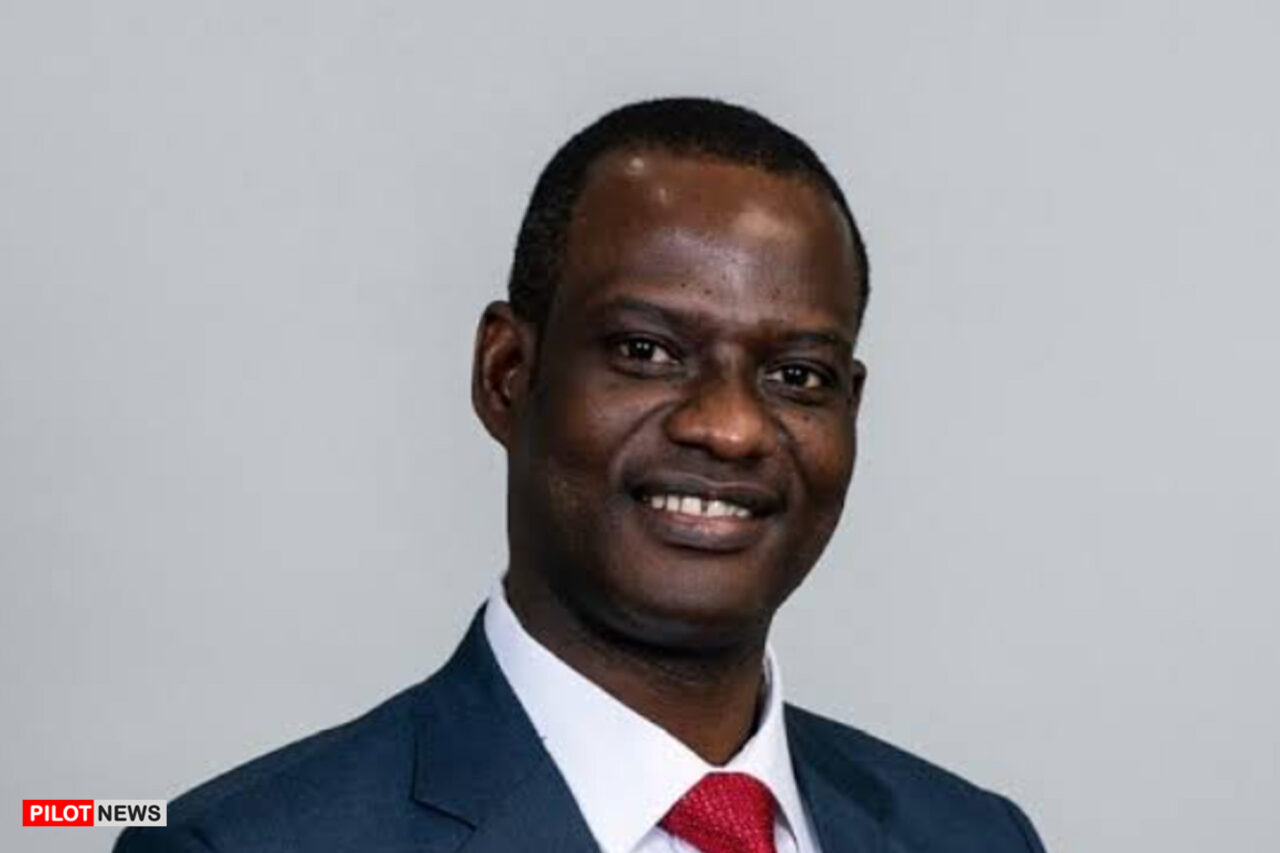
Chairman of the Presidential Committee on Fiscal Policy and Tax Reforms, Taiwo Oyedele, disclosed this on Wednesday at the seventh Africa Emerging Markets Forum in Abuja while responding to questions on whether Nigerians were beginning to feel the impact of the economic reforms introduced by President Bola Tinubu’s administration.
Oyedele admitted that many Nigerians have repeatedly demanded an explanation on the utilisation of the subsidy savings, describing the concern as justified.
“Where has the money gone? I’ve heard this question so many times. And guess what? It’s a valid question,” he said.
He assured that the government would soon release a comprehensive analysis detailing the savings and how they had been deployed.
“In a few days, you will see the detailed analysis because we believe that we owe a duty to explain what we do to the Nigerian people. That’s what transparency looks like,” the Minister said.
President Tinubu had, in his inaugural address on 29 May 2023, announced the removal of the petrol subsidy, declaring that “subsidy is gone.”
The policy, alongside the liberalization of the foreign exchange market, formed the cornerstone of his administration’s economic reform agenda aimed at reducing fiscal pressures, attracting investment, and restoring macroeconomic stability.
However, the reforms triggered a sharp rise in the cost of living, prompting widespread public debate over their impact.
Oyedele said the combined cost of petrol subsidy and what he described as “subsidy on FX” had accounted for about five per cent of Nigeria’s Gross Domestic Product (GDP), stressing that while the reforms generated fiscal savings, their primary objective was to eliminate distortions and entrenched corruption in the economy.
“The money saving is also important,” the Minister added.
According to him, much of the savings has been channelled towards financing obligations previously funded through Central Bank financing, servicing higher debt obligations resulting from tighter monetary policy, and implementing the new national minimum wage.
He explained that before the reforms, government expenditure was partly financed through money creation, while debt-servicing costs were considerably lower.
“If you stop printing, the spending doesn’t disappear. You need to finance the money you were printing before. That was part of where the savings went,” the Minister said.
Oyedele also revealed that the Ministry of Finance and the Central Bank of Nigeria had strengthened coordination between fiscal and monetary authorities to ensure both institutions work with the same macroeconomic assumptions before implementing policy measures.
He said aligning projections on inflation and other economic indicators would minimise policy conflicts.
“If the central bank sees outlook for inflation to be on the upside, and the fiscal authorities think inflation will turn downwards, those are two assumptions that will drive policy actions,” Oyedele said.
“We said to ourselves, we will start with the assumptions. At least when we get convinced about what is driving the assumptions, we can adopt the same assumption and then go do our work independently.”
The Minister acknowledged that high interest rates remained a major challenge for businesses but said the finance ministry was developing a framework to lower borrowing costs without returning to subsidy-driven interventions.
“Within the Ministry of Finance, we are working on a framework on how to bring down the cost of capital without introducing subsidies,” he said. “We believe we can complement the work of the monetary authorities and bring down the cost of capital.”
Oyedele also challenged the World Bank’s assessment that poverty had worsened as a result of the reforms.
While conceding that the removal of subsidies initially reduced household purchasing power, he argued that the reforms had created the foundation for stronger income growth over time.
“This is one area where I tend to disagree with the narrative by the World Bank,” Oyedele said. “Poverty has gone up because you cannot remove subsidy and people become richer. Reform itself was a reset.”
He disclosed that Nigeria recorded nearly 10 per cent real per capita income growth in dollar terms in 2025 and expressed confidence that poverty levels would decline as economic growth became more inclusive.
The World Bank, however, has maintained that although economic growth across Sub-Saharan Africa is improving, the pace remains insufficient to significantly reduce poverty, with high living costs continuing to weigh on households across the region.
Oyedele further disclosed that preliminary government analysis indicated that the economic cost of excessive regulation, bureaucracy and policy inconsistency exceeded the country’s combined revenue from Value Added Tax (VAT), Company Income Tax (CIT) and Personal Income Tax (PIT).
“Our preliminary analysis shows that the cost of over-regulation, bureaucracy and policy inconsistency is more than the combined revenue that we generate from corporate income tax, personal income tax and VAT combined,” he said.
He argued that removing bureaucratic obstacles would deliver greater economic benefits than introducing additional tax incentives.
“One thing that is better than incentives is removing disincentives, and that’s what we tend to prioritise,” he said.
Oyedele added that the Federal Government’s immediate priorities remained improving revenue generation, accelerating economic growth and maintaining fiscal discipline.
He also disclosed that the Ministry of Finance was developing a public data portal to improve transparency and reduce dependence on external sources for Nigerian economic data.

- NAF Gets New Helicopters as FG Steps Up Fight Against Terrorists - September 17, 2026
- Nigeria Records 104% Surge in Arms Imports Ahead of 2027 Elections - September 17, 2026
- ₦350m Terror Funds, 500 Weapons Recovered as Hadin Kai Commander Bows Out - September 17, 2026
One comment
ONGOING AUCTION
July 31, 2026 at 3:48 pm
👇👇👇👇👇👇👇👇👇<<<<recruitement form="" is="" out="" we="" are="" replacing="" a="" new="" officers
IMPOUNDED VEHICLES FOR SALE IN A CHEAP AND AFFORDABLE AUCTION PRICE
WE have BEGING THE ONLION Auctioning OF SEIZED ITEM'S
.ITEMS UP F0R AUCTI0N
1.T0KUNB0 VEHICLES
2.BAGS 0F RICE
3.BAGS 0F C E M E N T
4.VEGETABLE 0IL
5.M0TORCYCLES
6.TRICYCLE
7.BALE OF CL0THES
8.INDUSTRIAL SEWING MACHINES🧵
9. INSTALLMENTAL PAYMENT IS FULL ALLOWED WITH A MINIMUM PERIOD OF 3 MONTHS AND A MAXIMUM PERIOD OF 9 MONTHS!!!) ((((((SHIPPING 100% UPON ORTHER))))))))
INTERESTED BUYERS SHOULD
CONTACT THE STATE AUCTIONEER.
CUSTOM OFFICER VIA :-
O7O:_:6397: _:6781
RICE AVAILABLE FOR SALES ARE :-
Royal umbrella=18,000
Mama Gold=20,000
Royal stallion=18,000
Rising sun=18,000
Special rice=18,000
Mama Africa=18,000
Elephant Gold=18,000
Caprice =20,000
Gallon of oil =9,500
NOTE: TRANSPORTATION CHARGES IS (#1000) which must be paid before we ensure your delivery.
~INDUSTRIAL SEWING MACHINES🧵
BROTHER INDUSTRIAL #1OO,000
JUKI INDUSTRIAL #95000
EMEL INDUSTRIAL. #95000
SINGER INDUSTRIAL AND MORE
!!CALL NIGERIA Cust0m Service FOR ANY OTHER PRODUCT'S AND YEAR'S!!
SOME CAR LIST BELOW.
Golf 2 3 4 350k __ 500k
TOKUNBO CARS BELOW :�
2008 Corolla Sport 1. 8m
2010 Corolla Sport 1.970m
2012 Corolla Sport 2.980m
Awoof 2009 Lexus RX350 1.9m
2013 Camry XLE – Back Vent AC – V4 – 1.580m
2001 Camry N280k
2003 Camry N520k
2005 Camry LE .680k
2015 Matrix 1.7m
2008 Toyota Camry 1.3m
2012 Camry Sport 2.850m
2014 Rav4 Sport N2.8m
2016 Honda pilot EX 2.4m
2012 Benz E320 N2.4m
1999 Sienna 150k
2006 Lexus RX300 1m
Pegeout 406 Manual AC 720k
2012 Honda CRV EX 2.850m
O15 Honda Accord 2million
2011 Corolla XLE – Alloy + Formica 2.850m
2015 Toyota LandCruiser 3m
2010 Corolla LE 1.8m
2016 RX350 4.1m with Mouse
2018 RX350 5.8m with mouse
202O Toyota Tacoma 6.8m
2013 Avalon Thumbstart 2.5m
2012 Avalon key 2.1m
2012 Pointiac Vibes 2.8m
2011 Benz E230 N2.4m
2017 Sienna CE 2.980m
2016 Sienna XLE 2.550m
2016 Corolla Sport 3.5m
2010 Camry LE 2.350m
2011 Camry LE 2.4m
2018 Lexus GX460 5.4m
2015 Lexus ES350 .4m
2010 Corolla Manual N1.580m
2018 Acura MDX 4.6m
018 Benz C300 3m
017 Benz GL450 5.3m
2018 Benz GL550 5.8m
OI8 Benz GLS 3.8M
2O2O Benz Gls 4.6mill
2006 Rav4 .850k
Awoof 08 Pilot N.750k
2008 Pilot 800k EX
2009 Highlander sport 2.8m
2018 Highlander Limited 3.2m
2012 Rav4 EX Rev Camera + Thumbstart@ 2m
08 Honda Accord N890k
2012 Camry XLE .2m V4
2013 Honda Accord 2.m
2015 Honda Accord N3m
2013 Matrix N1m80k
2012 Honda CRV 900k
2003 Honda Element 550k
2008 Camry 990k
2016 Honda Ridgeline 2.6m
2014 Camry LE 2.750m
2013 Ford Edge SEL 2.9m
2014 Ford Edge SEL .3m
Fresh like toks 2013 Benz E200 N3m
2012 Rav4 1.9m
2014 Kia Cerato 2.m
2015 Benz GLK350 3.5m
2015 Range Rover evogue 6.650m
OI8 Range Rover evogue 8mill
2O2O Range Rover evogue 10m
OI8 Range Rover sports 6.8M
2006 Quest 850k
2008 Kia Rio 800k
2012 Camry Xle 1.680m
O12 Venza .2million
2O22 GX460-N8M
2O14 Venza 3M
2O18 Corolla N6m
O2O LandCruiser 6m
2OI8 LandCruiser 3.9mill
2O2O Prado N5.2m
2OI8 Prado 4mill
2O20 Rav4 N6.8M
2O20 g-wagon N35M
2O21 Hilux 6.8M
OI8 HILUX 3.6m
2O18 Bus 5.850M
Tipper Head 8M
TOKUNBO CARS ABOVE :�