

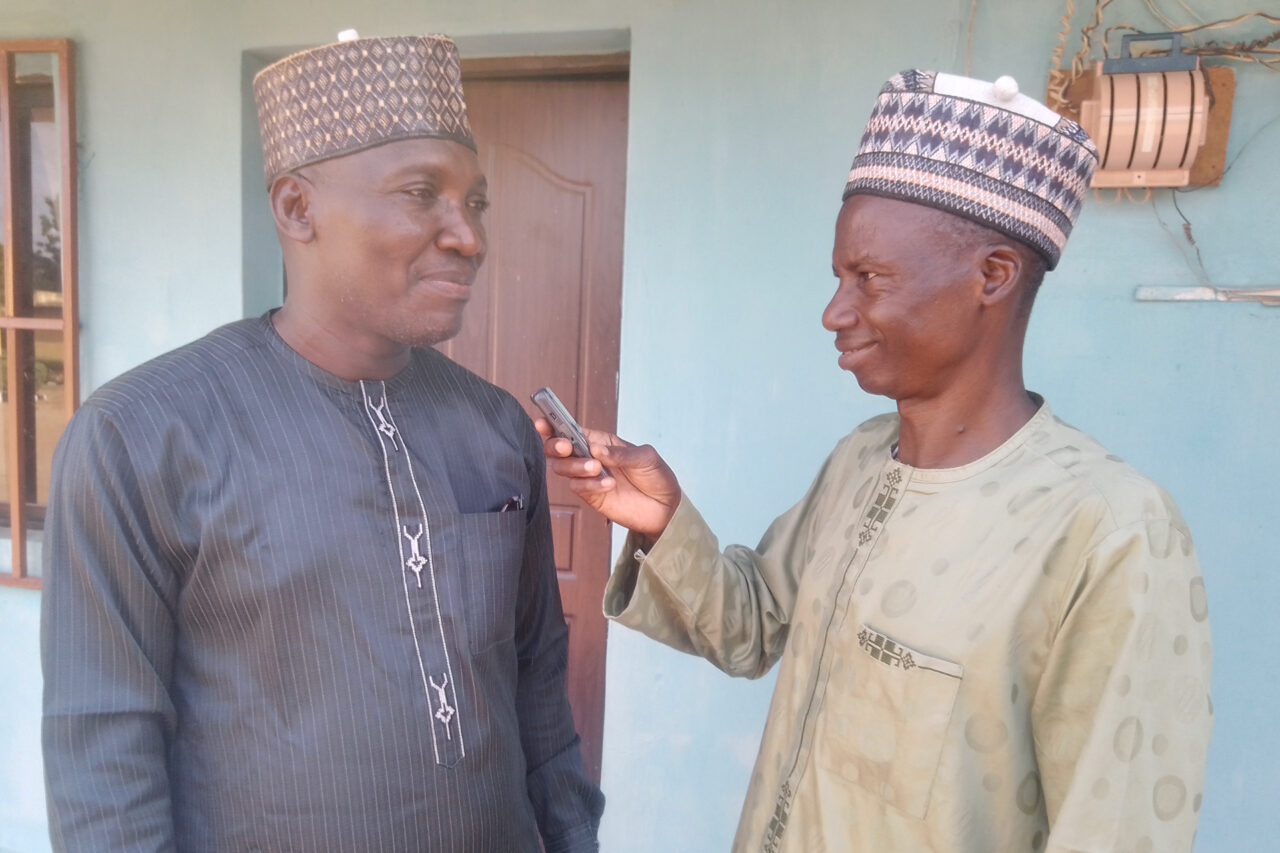
Language has been the most viable tool of communication, and people are identified by the language they speak. Alas, some languages have gone extinct. In this interview with Regional Correspondent Hassan Umar Shallpella, the Adamawa State Chairman of the Nigeria Indigenous Languages Development Council (NILDC), Joshua Timothy Napa, revealed efforts by the council to revive the Holma language in the Song Local Government Area of Adamawa State, which has since gone extinct.
The West African Pilot News: Sir, can you introduce yourself and the position you are holding in the Nigerian Indigenous Languages Development Council?
Joshua Timothy Napa: Okay, thank you very much. My name is Joshua Timothy Napa. I’m the chairman of the Nigeria Indigenous Languages Development Council, Adamawa State Chapter.
The West African Pilot News: Sir, as the chairman, when was this council formed?
Joshua Timothy Napa: Well, this is a national body of indigenous languages. It was founded in 2014 in Jos. It’s a conglomerate of different ethnic nationalities that gathered in Jos to form this formidable group. But this group was formed here in Adamawa State in 2018, when we attended that national meeting. We came back home, and then we formed this organization. Now the organization is waxing very strong.
The West African Pilot News: Can you tell us a little bit about the reason behind the formation of this organization?
Joshua Timothy Napa: Well, one is to preserve our ethnic nationalities so that no language will go extinct, and this is our cardinal objective. Because we deal with media, religion, education, and so on. This will help us bring our ethnic nationalities together so that none of our languages goes extinct. So these are the major objectives of this organization.
The West African Pilot News: In Adamawa State, we have many tribes. How are you going to ensure that all the tribes are now under this umbrella?
Joshua Timothy Napa: Well, in our archives or in our register now, we have not less than 76 ethnic nationalities. We have all the chairmen and secretaries of every ethnic nationality. My secretary-general has it in his own file. So if we want to call for a meeting, it’s very easy; we will just pick up our phone and invite them. So if any group holds an activity, social gathering, or cultural fiesta, they can invite us to attend on behalf of the state. So, disseminating information is very easy through our secretaries and the chairman or president of ethnic nationalities.
The West African Pilot News: As you pointed out earlier, about language extinction. Do you have any ideas to ensure that people speak their mother tongue so their children can learn it?
Joshua Timothy Napa: Yes. Yesterday, I was in Song. One of the languages that has gone extinct for a very, very long time is Holma. And which, I… thank God, one of the councilors of that area is a Holma by tribe. He came, he approached me. He told me, “Sir, I am Holma, but I don’t speak Holma anymore. I don’t even know the language anymore.” But at one of our national programs we attended two years ago, a thesis was presented by Holma at one of the colleges in Kaduna. Doctor told us that if we come back home, when we are ready, we can assemble ourselves and go to Kaduna. Then we can use the thesis of Holma languages to at least enable them to speak. But as… as I am telling you now, we are trying to pick one after the other, and the Holma language or tribe is coming back to its full step.
The West African Pilot News: So in a nutshell, you are now trying to revive the Holma that had gone extinct?
Joshua Timothy Napa: That has gone extinct, yes. Yes, sir.
The West African Pilot News: And then in Adamawa State, what are the challenges are you facing?
Joshua Timothy Napa: Well, the challenges of superiority. This ethnic nationality will say, “I am bigger than this,” and this has been… we are trying to erase this. Because our languages are one. God has given us this language so that everyone will speak fluently to his child, his ward, or his family. So if that is the case, we need to come together as ethnic nationalities in the state so that we speak with one voice. The problem, as I said now, is a kind of superiority. This tribe will say, “I am bigger,” and this tribe will say, “They are not much, they are not up to 200.” And then we have been facing this, and we have been telling them, please, let’s set this aside and bring unity amongst ourselves.
The West African Pilot News: As the chairman of this council, Adamawa State Chapter, since your election, what areas have you focused on?
Joshua Timothy Napa: Well, today, I have less than a year to crown my years in office, even though the mandate is five years. But for the coordinators within the local government, it’s three years. So, on June 22nd next year, by the grace of God, my position will lapse after five years, and then another election will take place.
The West African Pilot News: You have spent about four years in office. Can you enumerate some of the achievements you recorded within the period?
Joshua Timothy Napa: Yes. Our achievement, one, we visited our traditional institutions, most especially the first class. And now, His Excellency, Governor Ahmadu Umaru Fintiri, has constituted many again. So, second class, third class, we visited all of them. Then we visited all the first-class chiefs. And others, the district heads, we visited them. We visited line ministries that work in close collaboration with indigenous languages: Education, Information, Culture and Tourism, Women, Youth, and the Art Council. We visited all these line ministries. And then we visited other individuals who have been held in high esteem within the state to tell them that this organization exists, so that we will come together and work for the benefit and progress of our state.
The West African Pilot News: Within the period, what were the challenges you faced and how did you overcome them?
Joshua Timothy Napa: Hm. You know, challenges are always numerous, but the basic one is funding. But we have been trying to see how we tax ourselves, then fund ourselves, and then bring in from other places. Sometimes we engage our critical stakeholders if we want to do an activity. But right now, we have an office where the furniture provision is still in place, and we are trying to figure out how to fix it. And then, at the office, we went to His Excellency, sometimes two or three years ago, and he promised to see what he could do about a piece of land that would be given to us, and that the council would build an office or secretariat for us. Those are his words from two or three years ago. So we are looking up to this, and then we’ll still go back to His Excellency again and plead with him, what you have told us two or three years ago, please, if God permits, we want you to help us so that we will have this office in hand.
The West African Pilot News: Do you have any message for the people of the country regarding ethnicity?
Joshua Timothy Napa: Yes. Unity is one, and unity is diverse. We must come together, even though Nigeria has ethno-nationalities in this country that we have, you know. Uh, we are trying to figure out how to talk to each other politely. Since we have geopolitical zones and diverse cultures, it’s difficult. But through the media, we are trying to convey the message that all cultures and tribes will come together so that we speak with one voice. Through this, we will continue to achieve and then make our home a reality for every individual and our children. So that these languages and tribes, we will try to see how we teach them when they grow, so that they continue to speak with one voice. This is our earnest prayer.
The West African Pilot News: Thank you very much for the audience.
Joshua Timothy Napa: Thank you very much. Thank you so much. I’m very grateful.

- Kenya’s Dangote Paradox: Restricting African Traders While Welcoming African Billions - October 1, 2026
- When Nigeria and Italy led a $5 billion global education financing campaign - September 28, 2026
- 2026 Peace Day: Peace Begins in the Classroom - September 20, 2026