

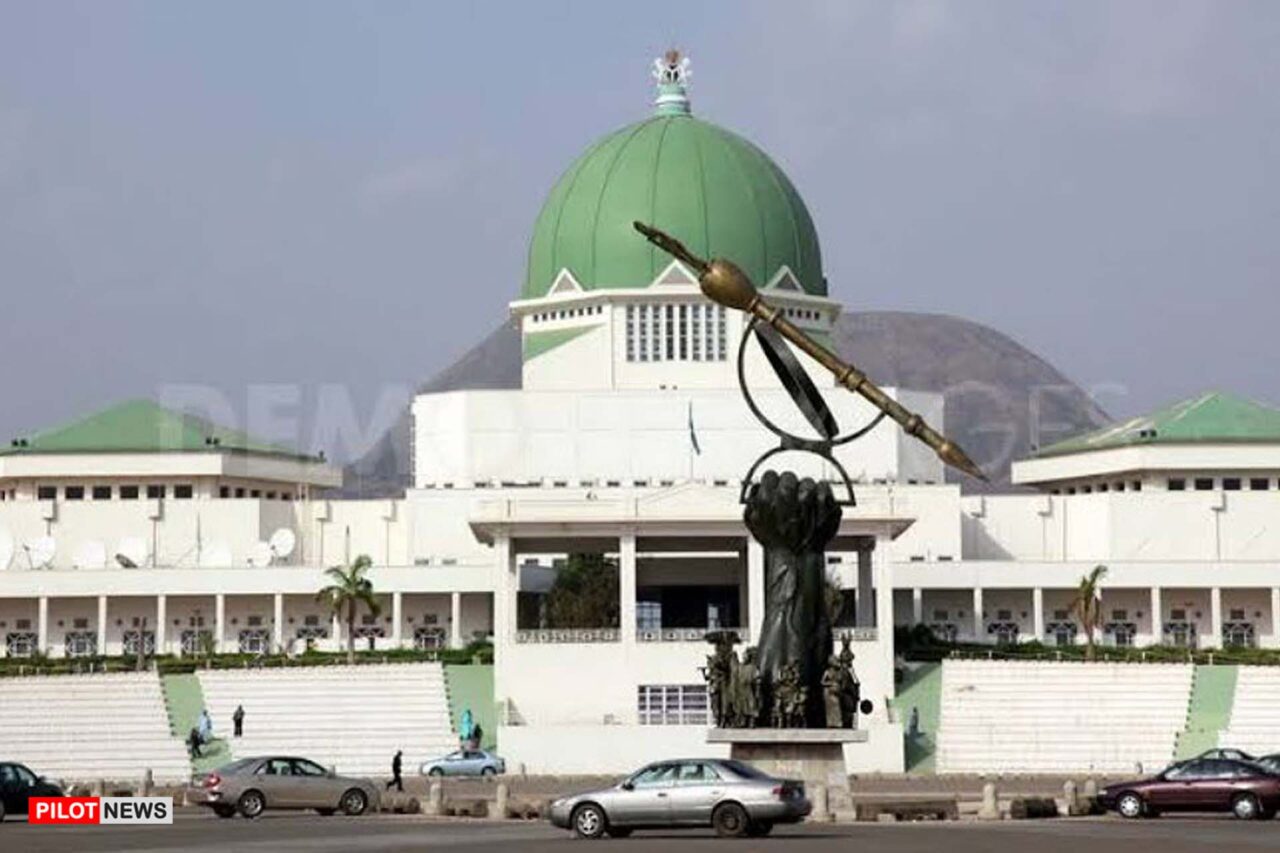
The National Assembly has clarified that only the constitutional amendment bill seeking to establish State Police Services has been transmitted to the 36 State Houses of Assembly for consideration so far.
The clarification followed reports suggesting that all the Constitution Alteration Bills currently before the National Assembly had been forwarded to the state legislatures.
In a statement on Tuesday, the Clerk to the National Assembly, Kamoru Ogunlana, said the State Police Bill was the only proposal that had reached the state assemblies.
The statement was titled, “National Assembly Clarifies Transmission of Constitution Alteration Bill to State Houses of Assembly.”
Ogunlana recalled that the National Assembly announced on September 16 that it had transmitted the Constitution of the Federal Republic of Nigeria, 1999 (Sixth Alteration) Bill, 2026, titled “A Bill for an Act to Alter the Constitution of the Federal Republic of Nigeria, 1999 to Provide for the Establishment of State Police Services; and for Related Matters.”
“For the avoidance of doubt, it is only this particular Constitution Alteration Bill that has so far been transmitted to the State Houses of Assembly. It is therefore incorrect to suggest or create the impression that all the Constitution Alteration Bills before the National Assembly have been transmitted to the States,” he said.
The Clerk said the decision to prioritize the State Police Bill followed widespread calls for reforms to Nigeria’s policing and security architecture.
The Bill proposes a constitutional framework for establishing State Police Services alongside the Federal Police Service. Under the proposal, state police would be responsible for policing within their respective states, while the Federal Police Service would retain responsibilities involving federal matters, including interstate and national security issues.
Other amendments still before NASS
The clarification is significant because the ongoing constitutional review covers a much wider range of proposed reforms.
Other proposals under consideration include local government financial autonomy, electoral reforms, independent candidacy, judicial reforms, devolution of powers, fiscal reforms and special legislative seats for women.
However, the State Police proposal is currently ahead of the others in the legislative process.
Reports on the transmission showed that it was the only constitutional alteration proposal from the current exercise that had been passed in the required form by both chambers of the National Assembly and was therefore ready to proceed to the state assemblies.
Ogunlana said the other Constitution Alteration Bills would be forwarded to the states once they had been passed in identical form by the Senate and the House of Representatives.
“The other Constitution (Sixth Alteration) Bills before the National Assembly will be transmitted to the Houses of Assembly of the 36 States of the Federation upon their passage in identical form by both Chambers of the National Assembly, in accordance with the constitutional amendment process,” the statement added.
24 states required
The transmission of the State Police Bill to the 36 state assemblies marks the next stage of the constitutional amendment process under Section 9 of the 1999 Constitution. At least two-thirds of the state Houses of Assembly — 24 out of 36 — must approve a constitutional alteration before the process can proceed to its final stages. The National Assembly had given the state legislatures 30 days to consider the bill and communicate their positions, according to reports following its transmission on September 16.
The proposed reform would replace the existing constitutional arrangement, under which the Nigeria Police Force is the constitutionally recognised police force, with a framework providing for both Federal and State Police Services. The National Assembly said it remained committed to conducting the Constitution Alteration process transparently and in accordance with the 1999 Constitution. It urged the media and members of the public to rely on official communications from the National Assembly for information on the status of the various amendment proposals.

- CBN Lowers Interest Rate to 23% as Inflation Eases - September 22, 2026
- NSCDC Shuts Down Fake Factory Juice Produce in Lagos - September 22, 2026
- Enugu Gov Appoints Nollywood Stars Rachael Okonkwo, Eucharia Anunobi as Aides - September 22, 2026